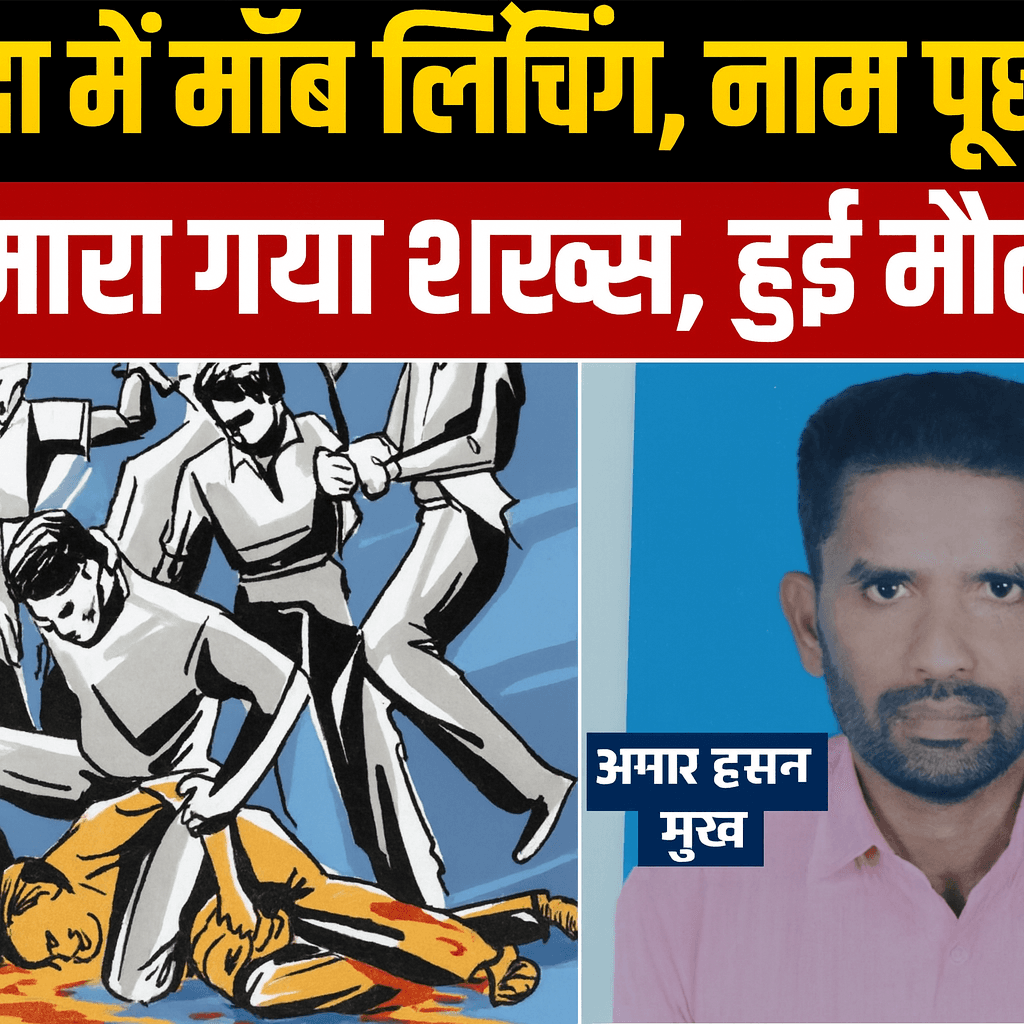
The brutal killing of Mohammad Athar Hussain in Bihar’s Nawada district has once again exposed what activists describe as the growing menace of Bhagwa terrorism—a form of majoritarian violence that thrives on religious profiling, mob vigilantism, and political impunity.
Athar Hussain, a Muslim cloth vendor, was attacked on 5 December in Bhatta village under Roh police station limits. According to his recorded statement before death, he was surrounded by a mob, stripped naked to verify his religion, tortured with heated iron rods, beaten repeatedly, mutilated with pliers, and set on fire after petrol was poured on his body. He succumbed to his injuries on 12 December while undergoing treatment at Bihar Sharif Sadar Hospital.
Religion as the Trigger
In a chilling video statement recorded on 7 December, Hussain said the attackers pulled down his pants to confirm his religious identity. “As soon as they found out I was Muslim, they poured petrol on me and burned me with a hot iron rod,” he said. He also alleged that his ear and finger were cut and that he was beaten relentlessly.
The family maintains that the assault began after villagers questioned him about his name and occupation. His wife, Shabnam Parveen, has named 10 accused in the FIR and accused villagers of tying him up, branding him with hot rods, breaking his hand, and threatening the family when they reached the village.
This was not a crime of suspicion—it was religious hatred enforced through mob violence.
From Vigilantism to Terror
Civil rights groups argue that such attacks follow a clear pattern seen across the country: Muslims are stopped, interrogated, accused of theft or other fabricated charges, and subjected to public punishment. The stripping, religious verification, and ritualised torture in Athar Hussain’s case reflect a form of terror meant not just to kill, but to intimidate an entire community.
“This is not spontaneous violence. This is organised hate,” said a Patna-based rights activist. “It is Bhagwa terrorism—where mobs act as judge, jury, and executioner under the protection of ideology.”
State Silence and Political Signals
While police claim they reached the spot after a 112 call, the fact that the mob felt confident enough to torture a man for hours points to a deeper failure of governance.
Critics say such crimes are emboldened by:
• Weak or delayed police intervention
• Withdrawal of cases against right-wing offenders in other states
• Public garlanding and glorification of accused by political leaders
• Absence of unequivocal condemnation from those in power
In Athar Hussain’s case, no senior state leader issued an immediate public condemnation, reinforcing perceptions of selective outrage and administrative apathy.
Impunity as Fuel
India’s Supreme Court has repeatedly warned that mob lynching threatens constitutional values. Yet, there is still no national anti-lynching law. Prosecutions are slow, witnesses are intimidated, and victims’ families are left unprotected.
The message this sends is dangerous: majoritarian mobs will not be punished, only managed.
This impunity is what converts hate into terror.
Beyond Bihar
From Uttar Pradesh to Rajasthan, from lynchings to bulldozer justice, critics argue that a pattern has emerged where violence against minorities is normalised under the guise of law and order or cultural nationalism.
Athar Hussain’s death is not an isolated incident—it is part of a continuum where ideology overrides humanity and the state chooses silence over justice.
Athar Hussain, a Muslim cloth vendor, was attacked on 5 December in Bhatta village under Roh police station limits. According to his recorded statement before death, he was surrounded by a mob, stripped naked to verify his religion, tortured with heated iron rods, beaten repeatedly, mutilated with pliers, and set on fire after petrol was poured on his body. He succumbed to his injuries on 12 December while undergoing treatment at Bihar Sharif Sadar Hospital.
Religion as the Trigger
In a chilling video statement recorded on 7 December, Hussain said the attackers pulled down his pants to confirm his religious identity. “As soon as they found out I was Muslim, they poured petrol on me and burned me with a hot iron rod,” he said. He also alleged that his ear and finger were cut and that he was beaten relentlessly.
The family maintains that the assault began after villagers questioned him about his name and occupation. His wife, Shabnam Parveen, has named 10 accused in the FIR and accused villagers of tying him up, branding him with hot rods, breaking his hand, and threatening the family when they reached the village.
This was not a crime of suspicion—it was religious hatred enforced through mob violence.
From Vigilantism to Terror
Civil rights groups argue that such attacks follow a clear pattern seen across the country: Muslims are stopped, interrogated, accused of theft or other fabricated charges, and subjected to public punishment. The stripping, religious verification, and ritualised torture in Athar Hussain’s case reflect a form of terror meant not just to kill, but to intimidate an entire community.
“This is not spontaneous violence. This is organised hate,” said a Patna-based rights activist. “It is Bhagwa terrorism—where mobs act as judge, jury, and executioner under the protection of ideology.”
State Silence and Political Signals
While police claim they reached the spot after a 112 call, the fact that the mob felt confident enough to torture a man for hours points to a deeper failure of governance.
Critics say such crimes are emboldened by:
• Weak or delayed police intervention
• Withdrawal of cases against right-wing offenders in other states
• Public garlanding and glorification of accused by political leaders
• Absence of unequivocal condemnation from those in power
In Athar Hussain’s case, no senior state leader issued an immediate public condemnation, reinforcing perceptions of selective outrage and administrative apathy.
Impunity as Fuel
India’s Supreme Court has repeatedly warned that mob lynching threatens constitutional values. Yet, there is still no national anti-lynching law. Prosecutions are slow, witnesses are intimidated, and victims’ families are left unprotected.
The message this sends is dangerous: majoritarian mobs will not be punished, only managed.
This impunity is what converts hate into terror.
Beyond Bihar
From Uttar Pradesh to Rajasthan, from lynchings to bulldozer justice, critics argue that a pattern has emerged where violence against minorities is normalised under the guise of law and order or cultural nationalism.
Athar Hussain’s death is not an isolated incident—it is part of a continuum where ideology overrides humanity and the state chooses silence over justice.