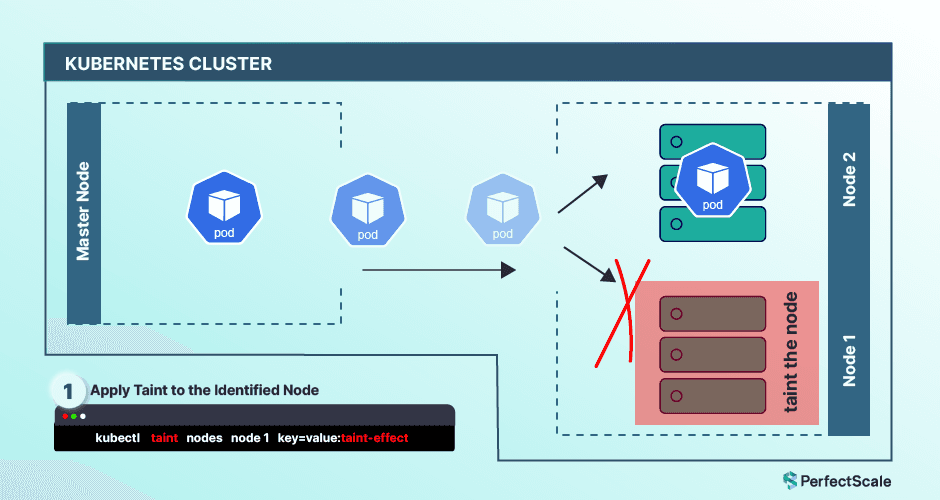
If you manage or work with Kubernetes infrastructure, you will eventually encounter taints and tolerations.
At first, they look confusing.
But once you understand the concept, they become one of the most powerful scheduling tools in Kubernetes. In this guide, you’ll learn:
• What Kubernetes taints are
• What tolerations are
• How taints and tolerations work together
• Real-world use cases
• Common mistakes to avoid Why Do Kubernetes Taints and Tolerations Exist?
By default, Kubernetes schedules pods on any node that has enough CPU and memory. That works for small clusters.
But in real-world infrastructure, not all nodes are equal. You may have nodes dedicated for:
• Databases
• GPU or ML workloads
• System components
• Spot or preemptible workloads You don’t want random application pods running on these nodes. This is the exact problem that taints and tolerations solve. What Is a Kubernetes Taint?
A Kubernetes taint is applied to a node. It tells the scheduler:
“Do not place pods on this node unless they explicitly allow it.” In simple terms:
A taint repels pods. Think of a taint as a “Restricted Area” sign on a node. Basic Structure of a Taint
A taint has three parts: • Key
• Value
• Effect Format (conceptually):
key=value:effect The effect controls what Kubernetes does with pods. Kubernetes Taint Effects Explained
There are three taint effects in Kubernetes. Understanding these is critical. 1. NoSchedule
• New pods will NOT be scheduled on the node
• Existing pods continue running This is the most commonly used taint effect. Safe and predictable. 2. PreferNoSchedule
• Kubernetes tries to avoid scheduling pods
• But may schedule them if no other nodes are available This is a soft restriction. 3. NoExecute
• New pods are blocked
• Existing pods are evicted if they don’t tolerate the taint ⚠️ Use with caution — this can cause outages. What Is a Kubernetes Toleration?
A toleration is applied to a pod. It tells Kubernetes:
“This pod is allowed to run on nodes with this taint.” Important clarification:
Tolerations do NOT attract pods to nodes.
They only allow scheduling if a taint exists. Simple Mental Model
• Taint → Blocks pods
• Toleration → Removes the block Both must match for scheduling to succeed. How Kubernetes Taints and Tolerations Work Together
When Kubernetes schedules a pod, it follows this process: 1. Scheduler checks available nodes
2. Node taints are evaluated
3. Pod tolerations are checked
4. Pod is scheduled only if all taints are tolerated If even one taint is not tolerated → the pod is rejected. Real-World Use Cases for Taints and Tolerations
This is where they provide real value. 1. Dedicated Nodes
Used for:
• Databases
• GPU workloads
• High-memory applications Only approved pods should run here. 2. System and Platform Workloads
Examples:
• Monitoring agents
• Logging components
• Networking plugins Taints prevent application pods from interfering. 3. Spot / Preemptible Nodes
• Cheaper
• Unreliable Taints ensure only fault-tolerant workloads are scheduled. 4. Node Maintenance
Temporary taints can:
• Control pod eviction
• Help during upgrades Taints vs Node Affinity vs Node Selectors
This confusion is very common. Key difference:
• Node affinity attracts pods
• Taints repel pods They solve different scheduling problems and are often used together. Common Kubernetes Taints and Tolerations Mistakes
Avoid these errors: ❌ Thinking tolerations pull pods
❌ Overusing NoExecute
❌ Forgetting system pods need tolerations
❌ Poor documentation of taints These mistakes make clusters hard to debug. When You Should NOT Use Taints
Avoid taints if:
• Node affinity is enough
• Your cluster is very small
• You want simple scheduling Taints are powerful — but add complexity. Final Summary
• Kubernetes taints protect nodes
• Tolerations allow specific pods
• Together they give fine-grained scheduling control If you operate production Kubernetes infrastructure, taints and tolerations are essential knowledge.
But once you understand the concept, they become one of the most powerful scheduling tools in Kubernetes. In this guide, you’ll learn:
• What Kubernetes taints are
• What tolerations are
• How taints and tolerations work together
• Real-world use cases
• Common mistakes to avoid Why Do Kubernetes Taints and Tolerations Exist?
By default, Kubernetes schedules pods on any node that has enough CPU and memory. That works for small clusters.
But in real-world infrastructure, not all nodes are equal. You may have nodes dedicated for:
• Databases
• GPU or ML workloads
• System components
• Spot or preemptible workloads You don’t want random application pods running on these nodes. This is the exact problem that taints and tolerations solve. What Is a Kubernetes Taint?
A Kubernetes taint is applied to a node. It tells the scheduler:
“Do not place pods on this node unless they explicitly allow it.” In simple terms:
A taint repels pods. Think of a taint as a “Restricted Area” sign on a node. Basic Structure of a Taint
A taint has three parts: • Key
• Value
• Effect Format (conceptually):
key=value:effect The effect controls what Kubernetes does with pods. Kubernetes Taint Effects Explained
There are three taint effects in Kubernetes. Understanding these is critical. 1. NoSchedule
• New pods will NOT be scheduled on the node
• Existing pods continue running This is the most commonly used taint effect. Safe and predictable. 2. PreferNoSchedule
• Kubernetes tries to avoid scheduling pods
• But may schedule them if no other nodes are available This is a soft restriction. 3. NoExecute
• New pods are blocked
• Existing pods are evicted if they don’t tolerate the taint ⚠️ Use with caution — this can cause outages. What Is a Kubernetes Toleration?
A toleration is applied to a pod. It tells Kubernetes:
“This pod is allowed to run on nodes with this taint.” Important clarification:
Tolerations do NOT attract pods to nodes.
They only allow scheduling if a taint exists. Simple Mental Model
• Taint → Blocks pods
• Toleration → Removes the block Both must match for scheduling to succeed. How Kubernetes Taints and Tolerations Work Together
When Kubernetes schedules a pod, it follows this process: 1. Scheduler checks available nodes
2. Node taints are evaluated
3. Pod tolerations are checked
4. Pod is scheduled only if all taints are tolerated If even one taint is not tolerated → the pod is rejected. Real-World Use Cases for Taints and Tolerations
This is where they provide real value. 1. Dedicated Nodes
Used for:
• Databases
• GPU workloads
• High-memory applications Only approved pods should run here. 2. System and Platform Workloads
Examples:
• Monitoring agents
• Logging components
• Networking plugins Taints prevent application pods from interfering. 3. Spot / Preemptible Nodes
• Cheaper
• Unreliable Taints ensure only fault-tolerant workloads are scheduled. 4. Node Maintenance
Temporary taints can:
• Control pod eviction
• Help during upgrades Taints vs Node Affinity vs Node Selectors
This confusion is very common. Key difference:
• Node affinity attracts pods
• Taints repel pods They solve different scheduling problems and are often used together. Common Kubernetes Taints and Tolerations Mistakes
Avoid these errors: ❌ Thinking tolerations pull pods
❌ Overusing NoExecute
❌ Forgetting system pods need tolerations
❌ Poor documentation of taints These mistakes make clusters hard to debug. When You Should NOT Use Taints
Avoid taints if:
• Node affinity is enough
• Your cluster is very small
• You want simple scheduling Taints are powerful — but add complexity. Final Summary
• Kubernetes taints protect nodes
• Tolerations allow specific pods
• Together they give fine-grained scheduling control If you operate production Kubernetes infrastructure, taints and tolerations are essential knowledge.