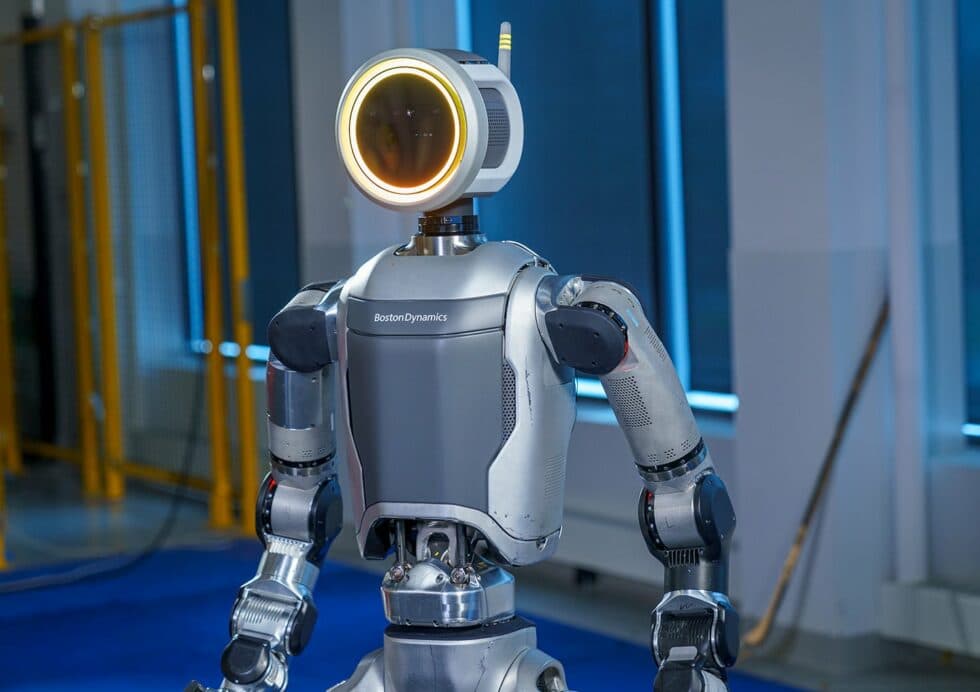
In January 2026, the global technology industry received a clear message — Artificial Intelligence is no longer only digital.
At CES 2026, AI wasn’t presented as just a chatbot or content generator anymore.
Instead, the focus moved toward real-world AI systems that can operate devices, automate workflows, and interact with physical environments. CES has always been the stage where new tech becomes visible before it becomes mainstream.
But CES 2026 strongly confirmed one major direction: AI is shifting from talking to doing.
From robotics to smart homes, consumer electronics to factories, the “AI layer” is now becoming built directly into products. CES 2026 attracted massive global attention with over 148,000 attendees and more than 4,100 exhibitors, including about 1,200 startups — showing that innovation is still moving fast in consumer technology. AI in 2026: From Digital Assistant to Real-World Operator
For the past few years, most people experienced AI through screens.
AI meant typing into tools, generating content, writing emails, summarizing documents, and editing images. But in 2026, this is evolving fast.
Instead of AI simply answering questions, companies are building AI systems that can plan actions, execute tasks, and operate devices.
This transformation is often called agentic AI or physical AI. In simple terms, it means AI is moving beyond suggestions and into execution.
AI is starting to function like a real assistant that can connect across apps, devices, machines, and workflows. CES 2026 highlights showed that robotics and AI integration are now central themes for where the tech world is heading next. Robotics Becomes a CES 2026 Headline Trend
Robots were not just side attractions at CES 2026.
They became one of the most discussed categories — not because they looked cool, but because they looked usable. The robotics industry is finally moving from “demo stage” to “real adoption stage.”
Companies are now building robots meant for workplaces like: warehouses, hospitals, retail stores, security patrols, cleaning systems, and delivery environments. What makes 2026 different is that AI vision, sensors, and navigation are improving quickly.
That allows robots to behave more safely in structured environments, which means automation is becoming practical. Experts also noted that humanoid robotics is increasingly under pressure to prove real value in workplaces — not just in research labs. Hardware Still Dominates CES — But Now It’s AI-Powered
Even though AI dominates headlines, CES remains a hardware-first event.
But now, nearly every major hardware category is being sold with AI built into the experience. In 2026, brands are competing not only on screen size, design, battery, or speed — but on how “intelligent” the product feels.
That includes TVs, smartphones, laptops, smart home devices, and health wearables. Samsung, for example, revealed a major display innovation at CES 2026 — a 130-inch Micro RGB display — highlighting how display technology and AI personalization are becoming part of the premium electronics race. Media coverage also emphasized that AI and robotics were visible everywhere at CES 2026 — even as classic categories like laptops, smart home devices, and car technology continued to dominate showroom floors. Why This Shift Matters: AI Is Becoming Infrastructure
The biggest CES 2026 takeaway is not one product launch — it’s the direction of the technology world.
The tech industry is clearly building a future where AI becomes a base layer, similar to the internet. This means AI will not feel like an “extra feature.”
It will feel like the standard operating system behind everything. In 2026, this shift shows up in real ways:
AI is moving closer to devices (on-device processing) rather than depending only on the cloud.
AI is entering industries like health, manufacturing, customer support, logistics, and retail.
AI is driving more automation, reducing repetitive work, and changing job requirements. This is why many experts call 2026 the start of AI as infrastructure, not AI as an app. The Risks Coming With Smarter Machines
This progress also brings serious responsibility. Digital AI failures are annoying — like wrong answers or bad summaries.
But physical AI failures can become dangerous if used in vehicles, factories, healthcare systems, or industrial machines. That is why privacy, safety testing, and regulation are becoming crucial in 2026.
As AI becomes more powerful, the biggest question becomes:
Can it be trusted at scale? Final Take
CES 2026 confirmed a major shift in the tech world.
AI is no longer only something you talk to — it is becoming something that acts.
Robotics, intelligent devices, and AI-driven hardware show that AI is moving into real-world execution. For consumers, this means smarter and more personalized devices.
For businesses, it means higher automation and faster operations.
And for the tech industry overall, it confirms one thing clearly: In 2026, AI isn’t just the future — it’s the foundation.
At CES 2026, AI wasn’t presented as just a chatbot or content generator anymore.
Instead, the focus moved toward real-world AI systems that can operate devices, automate workflows, and interact with physical environments. CES has always been the stage where new tech becomes visible before it becomes mainstream.
But CES 2026 strongly confirmed one major direction: AI is shifting from talking to doing.
From robotics to smart homes, consumer electronics to factories, the “AI layer” is now becoming built directly into products. CES 2026 attracted massive global attention with over 148,000 attendees and more than 4,100 exhibitors, including about 1,200 startups — showing that innovation is still moving fast in consumer technology. AI in 2026: From Digital Assistant to Real-World Operator
For the past few years, most people experienced AI through screens.
AI meant typing into tools, generating content, writing emails, summarizing documents, and editing images. But in 2026, this is evolving fast.
Instead of AI simply answering questions, companies are building AI systems that can plan actions, execute tasks, and operate devices.
This transformation is often called agentic AI or physical AI. In simple terms, it means AI is moving beyond suggestions and into execution.
AI is starting to function like a real assistant that can connect across apps, devices, machines, and workflows. CES 2026 highlights showed that robotics and AI integration are now central themes for where the tech world is heading next. Robotics Becomes a CES 2026 Headline Trend
Robots were not just side attractions at CES 2026.
They became one of the most discussed categories — not because they looked cool, but because they looked usable. The robotics industry is finally moving from “demo stage” to “real adoption stage.”
Companies are now building robots meant for workplaces like: warehouses, hospitals, retail stores, security patrols, cleaning systems, and delivery environments. What makes 2026 different is that AI vision, sensors, and navigation are improving quickly.
That allows robots to behave more safely in structured environments, which means automation is becoming practical. Experts also noted that humanoid robotics is increasingly under pressure to prove real value in workplaces — not just in research labs. Hardware Still Dominates CES — But Now It’s AI-Powered
Even though AI dominates headlines, CES remains a hardware-first event.
But now, nearly every major hardware category is being sold with AI built into the experience. In 2026, brands are competing not only on screen size, design, battery, or speed — but on how “intelligent” the product feels.
That includes TVs, smartphones, laptops, smart home devices, and health wearables. Samsung, for example, revealed a major display innovation at CES 2026 — a 130-inch Micro RGB display — highlighting how display technology and AI personalization are becoming part of the premium electronics race. Media coverage also emphasized that AI and robotics were visible everywhere at CES 2026 — even as classic categories like laptops, smart home devices, and car technology continued to dominate showroom floors. Why This Shift Matters: AI Is Becoming Infrastructure
The biggest CES 2026 takeaway is not one product launch — it’s the direction of the technology world.
The tech industry is clearly building a future where AI becomes a base layer, similar to the internet. This means AI will not feel like an “extra feature.”
It will feel like the standard operating system behind everything. In 2026, this shift shows up in real ways:
AI is moving closer to devices (on-device processing) rather than depending only on the cloud.
AI is entering industries like health, manufacturing, customer support, logistics, and retail.
AI is driving more automation, reducing repetitive work, and changing job requirements. This is why many experts call 2026 the start of AI as infrastructure, not AI as an app. The Risks Coming With Smarter Machines
This progress also brings serious responsibility. Digital AI failures are annoying — like wrong answers or bad summaries.
But physical AI failures can become dangerous if used in vehicles, factories, healthcare systems, or industrial machines. That is why privacy, safety testing, and regulation are becoming crucial in 2026.
As AI becomes more powerful, the biggest question becomes:
Can it be trusted at scale? Final Take
CES 2026 confirmed a major shift in the tech world.
AI is no longer only something you talk to — it is becoming something that acts.
Robotics, intelligent devices, and AI-driven hardware show that AI is moving into real-world execution. For consumers, this means smarter and more personalized devices.
For businesses, it means higher automation and faster operations.
And for the tech industry overall, it confirms one thing clearly: In 2026, AI isn’t just the future — it’s the foundation.