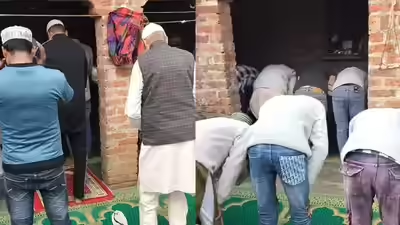
In Uttar Pradesh’s Bareilly district, police detained 12 individuals after a video went viral showing Muslims offering congregational namaz inside a private residence in Mohammadganj village under Bisharatganj police station.
Police justified the action as “precautionary,” claiming the empty house was being used as a temporary madrasa and warning that “new religious activity or gathering without permission” violates the law.
The incident has triggered outrage for a reason: it doesn’t just raise questions about policing — it exposes how discrimination often works in modern India: not always through written law, but through selective enforcement, selective suspicion, and selective outrage.
A Big Question: Since When Does Worship Need State Approval?
The strongest reaction online came from a simple question:
What law in India says you need official permission to pray inside your own home?
That question cuts to the heart of the issue.
India’s Constitution guarantees freedom of religion. Worship, prayer, and religious observance are protected rights. Restrictions can exist in the name of public order — but such restrictions must be reasonable, necessary, and non-discriminatory.
When police say “new religious activity needs permission,” they blur a dangerous line:
Is the state regulating a public institution?
Or is the state regulating private faith?
If such standards are applied broadly, it does not stop at Muslims. It becomes a precedent for intrusive policing of religious life itself.
How Discrimination Works Here (and Why It’s Not Always Direct)
Discrimination in such incidents rarely appears as a written ban like:
“Muslims cannot pray at home.”
Instead, it operates through silent mechanisms: suspicion, selective enforcement, and unequal standards.
1) Suspicion Becomes Automatic When the Identity Is Muslim
A group gathering for prayer is quickly framed as:
• “temporary madrasa”
• “illegal religious activity”
• “unauthorised religious gathering”
• “potential communal threat”
In many places today, Muslims do not receive the benefit of normal assumptions. What is treated as faith for others is treated as risk or provocation when Muslims do it.
So even before a crime exists, the presence of Muslims becomes the perceived problem.
This is discrimination in its modern form: criminalising ordinary life through default suspicion.
2) “Law and Order” Becomes a Tool — Not a Neutral Principle
Authorities often justify such actions with claims of preventing “tension” and maintaining “law and order.”
But here’s the contradiction:
If someone threatens tension because Muslims are praying, then the issue is not prayer — the issue is intolerance.
Yet, too often, the system punishes the vulnerable side instead of restraining the threatening side.
This creates a dangerous pattern:
• Those who threaten unrest gain power.
• Those who peacefully exercise rights face restrictions.
It becomes a veto:
“If we don’t like your worship, we’ll create tension — and then the state will stop you.”
That is not public order. That is mob leverage.
3) Unofficial Rules Are Created Only for One Community
Police statements like “permission is required” create an informal rulebook that only some communities are forced to follow.
Muslims must prove innocence.
Muslims must seek approval.
Muslims must reduce visibility.
Muslims must avoid gathering.
This produces a two-tier citizenship model:
Tier 1: Rights are assumed.
For some communities, religious gatherings are normal unless they clearly break a law.
Tier 2: Rights are conditional.
For Muslims, gatherings are treated as suspicious unless validated by authorities.
This is not equality under law — it is identity-based governance.
The Double Standard: Why This Case Matters
This incident became symbolic because people immediately recognised the unequal yardstick.
If a Hindu gathering happens inside a home…
It is often seen as:
• bhajan
• satsang
• kirtan
• havan
• jagran
Usually, it does not trigger detention or “permission” demands.
If Muslims gather for namaz inside a home…
It is framed as:
• illegal madrasa
• unauthorised religious activity
• potential threat to peace
• “new activity needing permission”
Same act — different meaning — because the community is different.
“Permission Culture” Is a Political Weapon
The most dangerous part isn’t detention alone — it’s the message such actions spread:
“You can worship, but only in ways we approve.”
This is how permission culture grows and fear spreads.
It pushes Muslims into self-censorship:
• avoid gatherings
• avoid religious education
• avoid visibility
• avoid even ordinary religious life
Freedom does not disappear overnight — it disappears gradually, when rights begin to feel unsafe.
Selective Enforcement Is the New Discrimination
Even if the state claims law-and-order concerns, the central issue remains:
Was the same standard applied equally?
If not — then law becomes a political tool.
Discrimination today is not always about new laws. It is about selective use of existing powers repeatedly against one community.
The law stays on paper.
But justice becomes selective in practice.
Conclusion: Rights Don’t Require Permission — Only Equality Does
The issue is not whether police can act to prevent unrest.
The real questions are:
Why is Muslim worship automatically treated as a source of tension?
Why are Muslims pressured to reduce visibility to keep others comfortable?
Why does “law and order” repeatedly mean restricting minorities rather than restraining aggressors?
When the system responds to bigotry by restricting Muslims, the message becomes clear:
• The intolerant are rewarded.
• The law-abiding are punished.
• Equality becomes optional.
That is how discrimination functions now — not always by banning Muslims openly, but by turning everyday rights into “permissions.”
Police justified the action as “precautionary,” claiming the empty house was being used as a temporary madrasa and warning that “new religious activity or gathering without permission” violates the law.
The incident has triggered outrage for a reason: it doesn’t just raise questions about policing — it exposes how discrimination often works in modern India: not always through written law, but through selective enforcement, selective suspicion, and selective outrage.
A Big Question: Since When Does Worship Need State Approval?
The strongest reaction online came from a simple question:
What law in India says you need official permission to pray inside your own home?
That question cuts to the heart of the issue.
India’s Constitution guarantees freedom of religion. Worship, prayer, and religious observance are protected rights. Restrictions can exist in the name of public order — but such restrictions must be reasonable, necessary, and non-discriminatory.
When police say “new religious activity needs permission,” they blur a dangerous line:
Is the state regulating a public institution?
Or is the state regulating private faith?
If such standards are applied broadly, it does not stop at Muslims. It becomes a precedent for intrusive policing of religious life itself.
How Discrimination Works Here (and Why It’s Not Always Direct)
Discrimination in such incidents rarely appears as a written ban like:
“Muslims cannot pray at home.”
Instead, it operates through silent mechanisms: suspicion, selective enforcement, and unequal standards.
1) Suspicion Becomes Automatic When the Identity Is Muslim
A group gathering for prayer is quickly framed as:
• “temporary madrasa”
• “illegal religious activity”
• “unauthorised religious gathering”
• “potential communal threat”
In many places today, Muslims do not receive the benefit of normal assumptions. What is treated as faith for others is treated as risk or provocation when Muslims do it.
So even before a crime exists, the presence of Muslims becomes the perceived problem.
This is discrimination in its modern form: criminalising ordinary life through default suspicion.
2) “Law and Order” Becomes a Tool — Not a Neutral Principle
Authorities often justify such actions with claims of preventing “tension” and maintaining “law and order.”
But here’s the contradiction:
If someone threatens tension because Muslims are praying, then the issue is not prayer — the issue is intolerance.
Yet, too often, the system punishes the vulnerable side instead of restraining the threatening side.
This creates a dangerous pattern:
• Those who threaten unrest gain power.
• Those who peacefully exercise rights face restrictions.
It becomes a veto:
“If we don’t like your worship, we’ll create tension — and then the state will stop you.”
That is not public order. That is mob leverage.
3) Unofficial Rules Are Created Only for One Community
Police statements like “permission is required” create an informal rulebook that only some communities are forced to follow.
Muslims must prove innocence.
Muslims must seek approval.
Muslims must reduce visibility.
Muslims must avoid gathering.
This produces a two-tier citizenship model:
Tier 1: Rights are assumed.
For some communities, religious gatherings are normal unless they clearly break a law.
Tier 2: Rights are conditional.
For Muslims, gatherings are treated as suspicious unless validated by authorities.
This is not equality under law — it is identity-based governance.
The Double Standard: Why This Case Matters
This incident became symbolic because people immediately recognised the unequal yardstick.
If a Hindu gathering happens inside a home…
It is often seen as:
• bhajan
• satsang
• kirtan
• havan
• jagran
Usually, it does not trigger detention or “permission” demands.
If Muslims gather for namaz inside a home…
It is framed as:
• illegal madrasa
• unauthorised religious activity
• potential threat to peace
• “new activity needing permission”
Same act — different meaning — because the community is different.
“Permission Culture” Is a Political Weapon
The most dangerous part isn’t detention alone — it’s the message such actions spread:
“You can worship, but only in ways we approve.”
This is how permission culture grows and fear spreads.
It pushes Muslims into self-censorship:
• avoid gatherings
• avoid religious education
• avoid visibility
• avoid even ordinary religious life
Freedom does not disappear overnight — it disappears gradually, when rights begin to feel unsafe.
Selective Enforcement Is the New Discrimination
Even if the state claims law-and-order concerns, the central issue remains:
Was the same standard applied equally?
If not — then law becomes a political tool.
Discrimination today is not always about new laws. It is about selective use of existing powers repeatedly against one community.
The law stays on paper.
But justice becomes selective in practice.
Conclusion: Rights Don’t Require Permission — Only Equality Does
The issue is not whether police can act to prevent unrest.
The real questions are:
Why is Muslim worship automatically treated as a source of tension?
Why are Muslims pressured to reduce visibility to keep others comfortable?
Why does “law and order” repeatedly mean restricting minorities rather than restraining aggressors?
When the system responds to bigotry by restricting Muslims, the message becomes clear:
• The intolerant are rewarded.
• The law-abiding are punished.
• Equality becomes optional.
That is how discrimination functions now — not always by banning Muslims openly, but by turning everyday rights into “permissions.”