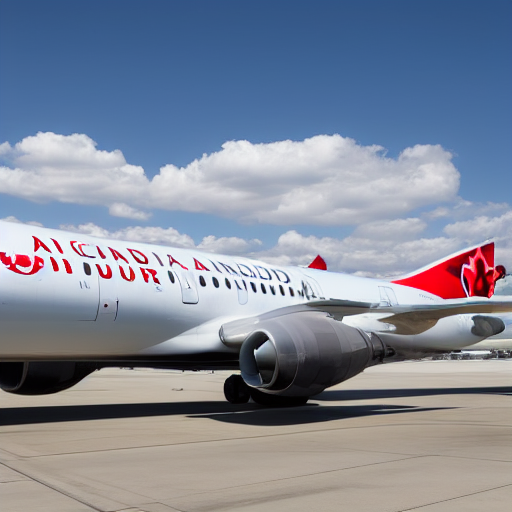
Air Canada has withdrawn its full-year 2026 financial guidance, a move that has drawn attention across financial markets and the aviation industry.
Financial guidance is typically used by companies to communicate expected revenue, profitability, and cost trends to investors. By stepping back from this practice for 2026, the airline is signaling that current market conditions are too unpredictable to support reliable long-term forecasts.
The decision comes at a time when the airline industry is facing renewed pressure from external factors.
One of the most significant challenges is the sharp fluctuation in jet fuel prices, which remains a major cost component for airlines. In addition, geopolitical tensions, particularly in energy-sensitive regions, have introduced further uncertainty into global travel demand and operational planning. These combined pressures have made it difficult for Air Canada to confidently estimate its financial performance for the full year.
Instead of offering a complete annual outlook, Air Canada has shifted toward providing short-term financial expectations.
The company is now focusing on quarterly guidance, giving investors a more immediate view of performance while retaining flexibility to adapt to rapidly changing conditions. This approach allows the airline to revise expectations as new data becomes available, rather than being locked into projections that may quickly become outdated.
For investors, the withdrawal of financial guidance often raises concerns.
It can be interpreted as a signal of increased risk and reduced visibility into the company’s future performance. As a result, such announcements sometimes lead to short-term market volatility. However, some analysts view this move as a cautious and transparent strategy, prioritizing accuracy over potentially misleading forecasts.
The development also reflects broader trends within the aviation sector, where uncertainty has become a defining feature in recent years.
Airlines worldwide continue to navigate fluctuating demand, cost pressures, and geopolitical disruptions. In this context, Air Canada’s decision underscores the challenges of long-term planning in a highly dynamic industry.
Ultimately, the withdrawal of 2026 financial guidance highlights the airline’s effort to manage expectations responsibly while maintaining operational flexibility.
As conditions evolve, investors and industry observers will closely watch how Air Canada adapts its strategy and communicates its performance in the months ahead.
Financial guidance is typically used by companies to communicate expected revenue, profitability, and cost trends to investors. By stepping back from this practice for 2026, the airline is signaling that current market conditions are too unpredictable to support reliable long-term forecasts.
The decision comes at a time when the airline industry is facing renewed pressure from external factors.
One of the most significant challenges is the sharp fluctuation in jet fuel prices, which remains a major cost component for airlines. In addition, geopolitical tensions, particularly in energy-sensitive regions, have introduced further uncertainty into global travel demand and operational planning. These combined pressures have made it difficult for Air Canada to confidently estimate its financial performance for the full year.
Instead of offering a complete annual outlook, Air Canada has shifted toward providing short-term financial expectations.
The company is now focusing on quarterly guidance, giving investors a more immediate view of performance while retaining flexibility to adapt to rapidly changing conditions. This approach allows the airline to revise expectations as new data becomes available, rather than being locked into projections that may quickly become outdated.
For investors, the withdrawal of financial guidance often raises concerns.
It can be interpreted as a signal of increased risk and reduced visibility into the company’s future performance. As a result, such announcements sometimes lead to short-term market volatility. However, some analysts view this move as a cautious and transparent strategy, prioritizing accuracy over potentially misleading forecasts.
The development also reflects broader trends within the aviation sector, where uncertainty has become a defining feature in recent years.
Airlines worldwide continue to navigate fluctuating demand, cost pressures, and geopolitical disruptions. In this context, Air Canada’s decision underscores the challenges of long-term planning in a highly dynamic industry.
Ultimately, the withdrawal of 2026 financial guidance highlights the airline’s effort to manage expectations responsibly while maintaining operational flexibility.
As conditions evolve, investors and industry observers will closely watch how Air Canada adapts its strategy and communicates its performance in the months ahead.